Inicio » Productos y productores » Baluartes » ...

Baluartes

16 agosto, 2010 1 Comentario

Aceite de oliva virgen extra de olivos milenarios

Nombre del producto:

Aceite de oliva virgen extra de olivos milenarios

Categoría alimentaria:

Aceite de oliva

Descripción breve:

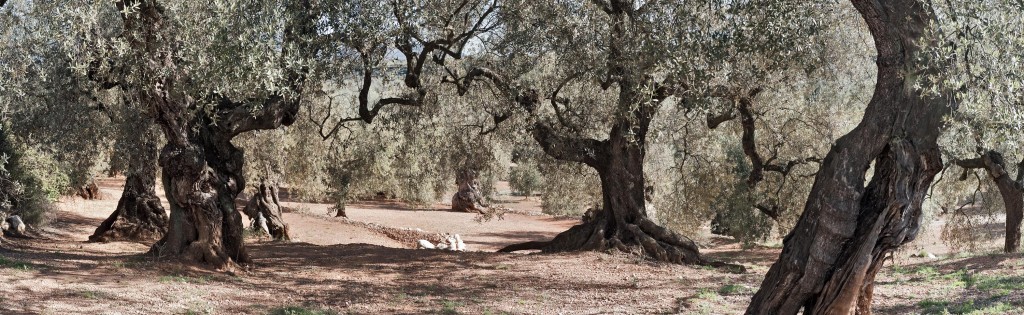
Existen muchos elementos que contribuyen a crear la identidad y el atractivo de un territorio: el clima, el relieve, la vegetación, la historia, la gastronomía, etc. Los olivos milenarios de nuestras comarcas son el resultado del trabajo bien hecho de centenares de generaciones de nuestras gentes. Son monumentos vivos que han dejado huella en nuestro paisaje, nuestra cultura y nuestra gastronomía.

El olivo ha sido protagonista indiscutible de la agricultura mediterránea y sigue hoy en día siendo un elemento básico en el paisaje de nuestras comarcas.

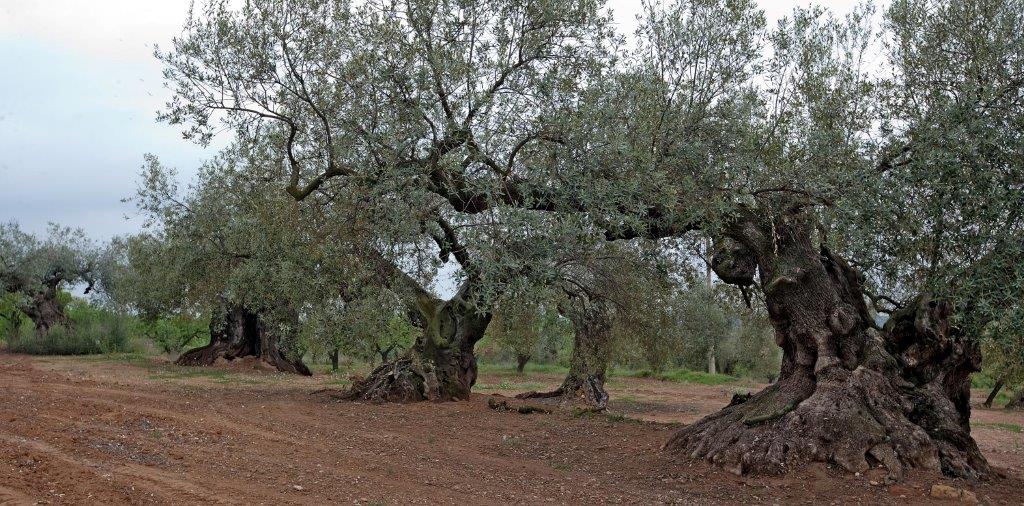
Durante más de mil años, nuestros agricultores se han esforzado en levantar esas paredes de piedra seca que protegen el suelo de la erosión del aire y el agua, en podar, en labrar esos olivares. El resultado de ese esfuerzo, ayudado por un clima y una tierra singular, es la pervivencia de esos ejemplares monumentales, verdaderos gigantes de copas plateadas y troncos nudosos (algunos tienen más de 12 metros de perímetro), que marcan hitos en nuestra memoria.

Hace unos años, muchos de estos olivos monumentales desaparecieron por la dificultad del cultivo (dan menor rendimiento por árbol, entre 40 y 60 Kg de aceitunas / árbol y su recolección es complicada debido al porte), su sustitución por otros, la tala para leña y, en los últimos años, debido a que estos monumentos vivos eran vendidos y arrancados del lugar donde fueron plantados hace miles de años para ser objeto de decoración en zonas ajardinadas de urbanizaciones.

Hoy, estos olivos tan singulares y sus paisajes siguen siendo muy valiosos para el desarrollo de esta zona por su interés educativo, cultural, social y económico. Desde el año 2003, el Grupo Intercoop y la cooperativa Clot d’En Simó, como iniciativa para la valorización del patrimonio agrario y cultural ligado al olivo, elaboran aceite de oliva virgen a partir de aceitunas procedentes exclusivamente de algunos olivos monumentales localizados en el Maestrat.

Para la elaboración de este aceite de oliva virgen extra se seleccionan las aceitunas de los olivos milenarios catalogados que cumplen las condiciones de tamaño del tronco, buen estado de conservación, buen estado fitosanitario, etc. La totalidad de estos árboles monumentales son de la variedad tradicional Farga. Sobre estos árboles, los técnicos de las cooperativas hacen un seguimiento del cultivo y recomiendan los trabajos a realizar para asegurar que la calidad de la aceituna sea excelente en el momento de la recolección.

Una vez acordada la fecha de recolección en función del estado de la aceituna, se acuerdan las condiciones, horarios de recepción y recolección con cada uno de los socios (propietarios de los árboles monumentales) y se lleva directamente a la almazara para elaborar el aceite mediante un sistema continuo de 2 fases. La elaboración (molturación, batido y centrifugado) se hace totalmente en frío. El tiempo que transcurre entre la recogida de la aceituna y el momento en que empieza a salir el aceite elaborado es inferior a 10 horas. Tras la elaboración, pasa directamente a depósito, donde se realiza una decantación natural.

El resultado es un aceite de aroma complejo y redondo, está compuesto principalmente por aromas a frutas de pulpa roja, tiene multitud de matices florales y de hierbas aromáticas, en boca se comporta de forma armónica y suave, siendo su entrada dulce, al final aparece un ligero amargor, debido a la frescura de la oliva.
Área histórica de producción / conexiones con grupos locales:

¿El producto se elabora en el área histórica de producción?

Comarca del Baix Maestrat – Provincia de Castellón.

Los olivos de los que se ha recogido la aceituna este año 2006 se encuentran en Canet, Xert, La Jana y Traiguera.

Esta iniciativa del Grupo Intercoop y de Clot d’En Simó, Coop. Comarcal está apoyada por la Asociación Amics de l’Olivera (www.amicsolivera.com).

Por otra parte, para fomentar el conocimiento y disfrute de la cultura ligada a estos olivos y su aceite, se ha iniciado una iniciativa de turismo cooperativo que permite visitar una almazara, hacer una cata de aceite y pasear entre estos monumentos vivos.

¿El producto se encuentra actualmente en el comercio?

Sí. Venta local y red de Tiendas Taula (tiendas de productos cooperativos)

En caso afirmativo, ¿en qué cantidades?

Esta campaña 2006, se han procesado unos 7.500 Kg de aceituna de variedad Farga, procedentes de 200 olivos monumentales que han producido 1.270 litros de aceite de oliva virgen extra. El aceite se comercializa en botellas de 500 mL.

Nombre de contactos relevantes:

Comarca del Maestrat (Castelló)

Ramón Mampel Dellà

+34 609282916 begin_of_the_skype_highlighting              +34 609282916      end_of_the_skype_highlighting

clotdensimo@intercoop.es

Millenary olive trees from Maestrat
Name of product:
Extra virgin olive oil from millenary olive trees
Food Category:
Oil
Brief Description:
There are a lot of elements that contribute to create the identity and attractiveness of a territory: climate, landscape, history, gastronomy etc. The millenary olive trees of this region are the result of the hard work of generations of local farmers. They are like monuments which have left footprints in our landscape, culture and gastronomy.
The olive tree has been the undeniable cornerstone of the Mediterranean culture, and still today is the basic element of the landscape in these regions.
For more than one thousand years, agriculturalists have made great efforts to build dry stone walls to protect the ground from erosion of air and water, prune the foliage, and take care of the land. The results of these efforts, helped by the unique climate and land, is the survival of these monumental trees, true giants of silvery leaves and knotted trunks (some of them have trunks more than 12m in circumference), that form a landmark in our memories.
Some years ago, many of these monumental olive trees disappeared due to the difficulty of cultivation (they give less yield, between 40-60 kg per tree, and collection is difficult due to their form), substitution for other trees, logging for firewood, and recently pulled up from the place they were planted a thousand years ago and sold to become a decorative piece in new developments.
Today these unique olive trees and their landscape are still very valuable for the development of this zone due to educational, cultural, social and economic interests. From 2003, the Intercoop Group and Clot d’en Simó cooperative, as an initiative for valuing agricultural and cultural estate attached to the olive tree, started making virgin olive oil  exclusively from these monumental trees from Maestrat.
To make this extra virgin olive oil, olives are taken from selected millenary trees which meet certain criteria:
trunk size, good state of conservation and health, etc. All trees are from the traditional variety Farga. On these trees, technicians from the cooperative follow the growth of the olives and recommend the needed work to be done to ensure the quality of the olives will be excellent at the time of collection.
Once the date of collection has been agreed, which depends on the state of the olives, the conditions and time of collection and reception are agreed with each of the members (owners of the monumental trees). The olives are taken directly to the oil mill to extract the oil in a continuous system in two phases. The extraction (grinding, mixing, centrifuging) is done completely in cold conditions, the elapsed time between receiving the olive and the moment the oil leaves the process is less than ten hours. After the extraction, the oil is  taken directly to a deposit where a natural decanting process occurs.
The result is oil with a complex and full aroma; it is mainly composed of red fruit aromas with flowery and herbal notes. In the mouth it behaves in a smooth and balanced manner, the first taste is sweet, at the end a slight bitter taste appears due to the freshness of the olive.
Name and address of outstanding contacts:
Ramón Mampel, Productor y presidente de Clot d’En Simó, Coop. Comarcal
Llum…………….. +34 964490331
Manolo Arnau……. +34 607456730 clotdensimo@intercoop.es
Nacho Landerer…. +34 650581215 Slow Food València info@elrincondelabiodiversidad.org
SLOW FOOD CONVIVIUM VALENCIA
The product is produced in the area of historical production? Yes
Comarca del Baix Maestrat – Provincia de Castellón.
The olive trees from where olives were collected in 2006 are in Canet, Xert, La Jana and Traiguera. The initiative of Intercoop Group and Clot d’en Simó cooperative is supported by the association of Olive friends (la Associació d’Amics de l’Olivera, www.amicsolivera.com). On the other hand, to foment the knowledge and enjoyment of the culture attached to these olive trees and their oil, a cooperative tourism initiative has been started including visits to oil mills, olive tasting and walks amongst these live monuments.
The product is available commercially? Yes. Sold locally and in the network “Tiendas Taula” (Outlets of cooperative products)
If yes, in what quantities?
In 2006, 7,500 kg of Farga olives have been processed from 200 monumental olive trees producing 1,270 l of extra
virgin olive oil. The olive is sold in bottles of 500 ml.
Millenary olive trees from Maestrat

One Response to Aceite de oliva virgen extra de olivos milenarios

  1. Joan says:

    Un gran producto, si no el mejor aceite producido en España, por lo menos para mí si es el más singular. Único en su línea.

Deja un comentario

Tu dirección de correo electrónico no será publicada. Los campos necesarios están marcados *

*


*